How Is BMI Calculated? The Formula, Step-by-Step Examples, and Limits
BMI uses a simple formula—weight divided by height squared. This article walks through both metric and imperial calculations and explains what the result means.
- bmi
- bmi formula
- how to calculate bmi
- body mass index
Medical Disclaimer: BMI is a screening tool, not a diagnostic instrument. The information below is educational. Consult a healthcare professional for personalized health assessment.
Body mass index (BMI) is one of the most widely used health screening metrics in the world — and the formula behind it is surprisingly simple. You only need two measurements: your weight and your height. Here is exactly how the calculation works in both metric and imperial units, with step-by-step examples.
The BMI Formula
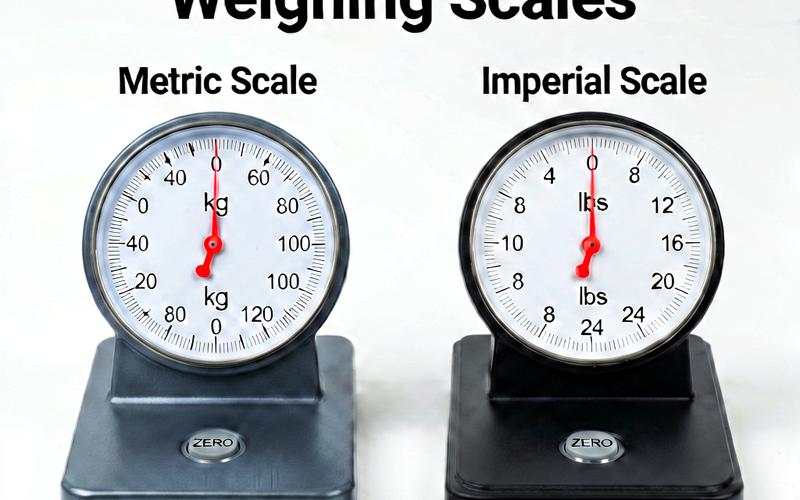
Metric (kilograms and centimetres)
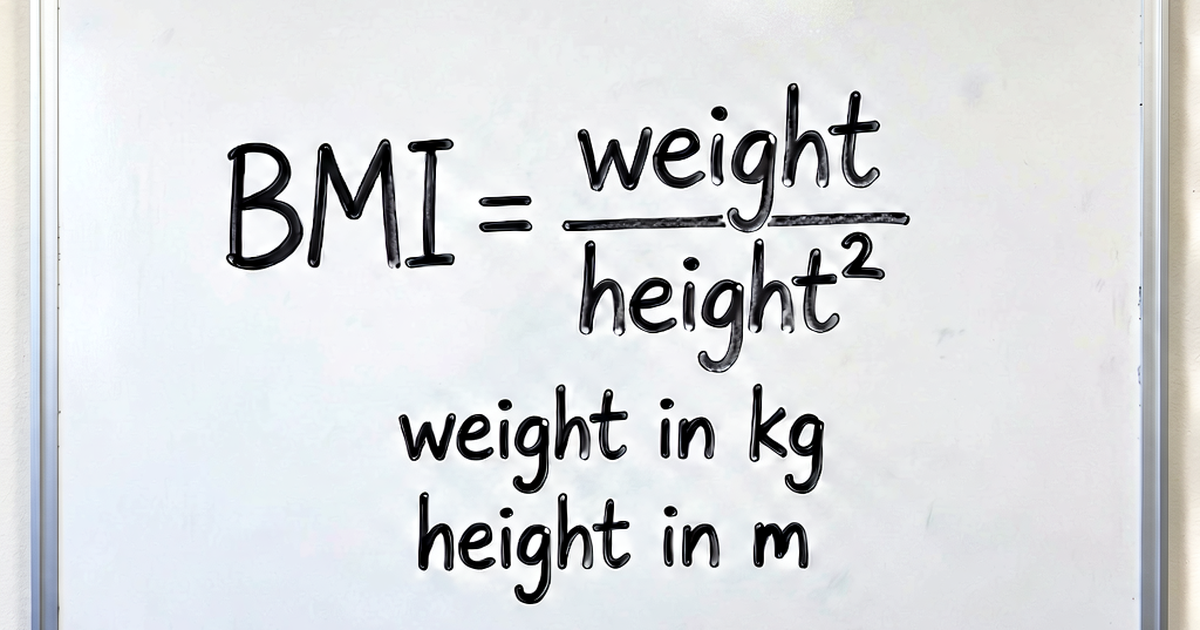
$$\text{BMI} = \frac{\text{weight (kg)}}{\text{height (m)}^2}$$
Note that height must be in metres, not centimetres. Convert by dividing centimetres by 100.
Imperial (pounds and inches)
$$\text{BMI} = \frac{\text{weight (lbs)} \times 703}{\text{height (in)}^2}$$
The factor 703 converts the result from lbs/in² to the standard kg/m² unit. Both formulas produce the same number for the same person.
Step-by-Step Metric Example
Person: 70 kg, 175 cm tall
- Convert height to metres: 175 cm ÷ 100 = 1.75 m
- Square the height: 1.75 × 1.75 = 3.0625
- Divide weight by height squared: 70 ÷ 3.0625 = 22.9
Result: BMI 22.9 — falls in the Normal weight range (18.5–24.9).
Step-by-Step Imperial Example
Person: 160 lbs, 5 ft 6 in (66 inches total)
- Convert height to total inches: (5 × 12) + 6 = 66 in
- Square the height: 66 × 66 = 4,356
- Multiply weight by 703: 160 × 703 = 112,480
- Divide: 112,480 ÷ 4,356 = 25.8
Result: BMI 25.8 — falls in the Overweight range (25.0–29.9).
BMI Category Reference
| BMI | Category |
|---|---|
| Below 18.5 | Underweight |
| 18.5 – 24.9 | Normal weight |
| 25.0 – 29.9 | Overweight |
| 30.0 and above | Obese |
Source: CDC — How Is BMI Calculated?
Why the Formula Uses Height Squared
The BMI formula squares height to account for the fact that body volume (and therefore weight) scales with the cube of height in theory, but the formula’s creator, Adolphe Quetelet, observed that weight in large populations scaled more closely with height squared in practice. This made it a convenient normalizing factor. It is not a perfect correction — one reason taller people tend to have slightly inflated BMI readings compared to shorter people of equivalent body composition — but it was a reasonable approximation for a 19th-century population statistic.
Modern research has explored more sophisticated formulas (such as “New BMI” or Ponderal Index), but none have replaced BMI as the global clinical standard because the simple version works well enough at the population level and requires no special equipment.
Limitations of the Formula
The BMI formula is entirely based on height and weight. It cannot distinguish between:
- Muscle and fat. A professional athlete with significant muscle mass may have the same BMI as someone with a high percentage of body fat.
- Bone density. Dense bones add weight without adding fat.
- Fat distribution. Visceral (abdominal) fat is metabolically distinct from subcutaneous (under-skin) fat, but both affect BMI the same way.
For a deeper look at what BMI misses, see our article The Limitations of BMI.
Quick Reference: Common Heights and “Normal Weight” Range
| Height | Normal Weight Range (BMI 18.5–24.9) |
|---|---|
| 5’0” (152 cm) | 94 – 127 lbs (43 – 58 kg) |
| 5’4” (163 cm) | 108 – 145 lbs (49 – 66 kg) |
| 5’6” (168 cm) | 115 – 154 lbs (52 – 70 kg) |
| 5’8” (173 cm) | 122 – 164 lbs (55 – 74 kg) |
| 5’10” (178 cm) | 129 – 174 lbs (59 – 79 kg) |
| 6’0” (183 cm) | 137 – 184 lbs (62 – 83 kg) |
| 6’2” (188 cm) | 144 – 194 lbs (65 – 88 kg) |
Values rounded to the nearest pound/kilogram.
Calculate Yours Now
Rather than doing the arithmetic manually, use our free BMI calculator — it handles both metric and imperial inputs, gives you your category instantly, and shows where you fall on the standard range.

Related reading
-
BMI Chart for Women: Understanding Your Results by Age and Height
A practical BMI reference chart for women, with height-by-weight tables, age-related context, and guidance on what the numbers mean for your health.
-
BMI for Children and Teens: How It's Calculated and Interpreted Differently
Child and teen BMI uses age- and sex-specific percentiles, not the adult 18.5–24.9 range. Here's what parents need to know about the CDC's pediatric BMI system.
-
High BMI Health Risks: What the Research Says
A BMI of 30 or above is linked to higher rates of heart disease, diabetes, sleep apnea, and certain cancers. This article reviews what the evidence shows and what it doesn't.